
.png)
Clay County Sheriff's Office Defends Use of License Plate Readers Amid Social Media Concerns
- Mountain Buzz

- Jun 25
- 2 min read
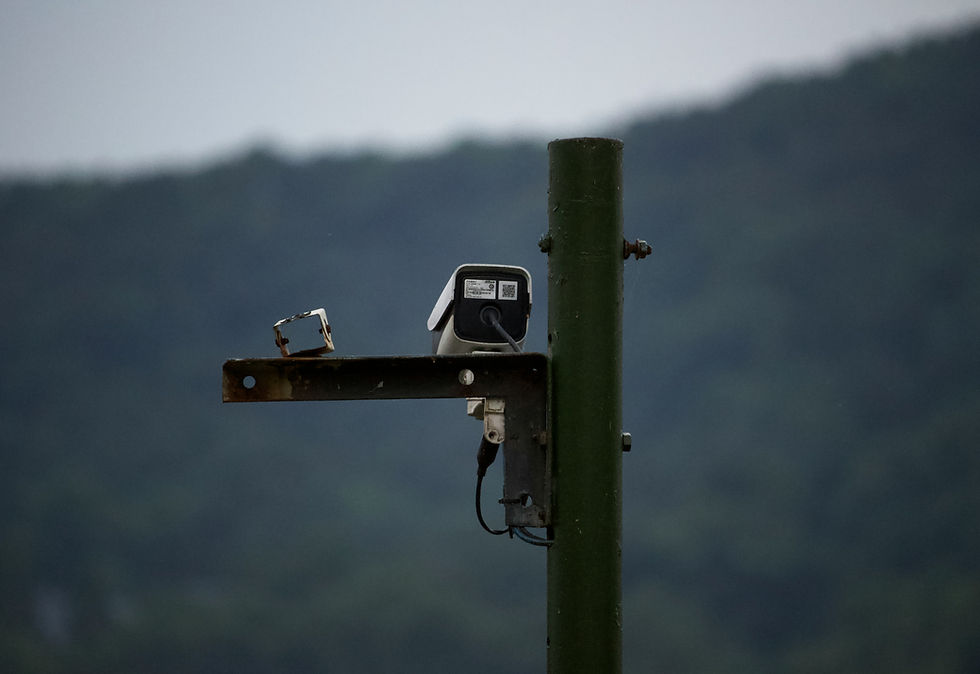
HAYESVILLE, N.C. — The Clay County Sheriff's Office is addressing public concerns over its use of license plate reader technology, saying the systems help solve crimes and locate missing people without collecting personal data from drivers.
In a statement released this week, the agency said recent social media chatter has raised worries about privacy, prompting officials to clarify how the systems operate.
The license plate readers, or LPRs, capture images of vehicle rears and license plates only, the statement said. That information can be used to query data already available through the Department of Motor Vehicles. The systems do not access or download personal information from passing motorists, nor do they photograph drivers, according to the sheriff's office.
Law enforcement benefits cited
Officials outlined several key uses for the technology:
Quickly checking plates against "be on the lookout," or BOLO, alerts. A neighboring county recently used similar data to apprehend a homicide suspect who had entered its jurisdiction.
Assisting with Amber Alerts by helping locate vehicles linked to child abductions, where time is critical.
Supporting Silver Alerts for missing elderly people, including dementia patients. Just two days ago, the Clay County Sheriff's Office used Flock data to locate an 82-year-old county resident in South Carolina and returned him home.
Tracking individuals with outstanding criminal warrants through a nationwide network of 80,000 to 100,000 cameras.
Aiding investigations into larceny, drug dealing and other serious crimes by identifying patterns among known associates.
Local systems and restrictions
Clay County owns five Flock brand cameras and four from another manufacturer funded by grants. None are mounted on public property, and none issue civil fines for traffic violations such as seat belt non-compliance or running red lights, the statement said. That distinguishes them from systems in some other states.
The sheriff's office also noted that many businesses, including home improvement stores and large retailers, use similar technology on private property to combat shoplifting.
Legal and historical context
Some residents have questioned the constitutionality of the systems, but federal courts have upheld their use, including in the case of Schmidt v. City of Norfolk, according to the statement.
Officials compared LPRs to other law enforcement advancements like radios, fingerprinting, DNA analysis and cybercrime tools, saying technology must evolve to match criminal tactics.
Oversight and transparency
The agency emphasized strict oversight, including tiered access levels and audits, and reported zero instances of misuse of LPR systems or other databases such as DCI, CJ Leads or TLO.
"We hold ourselves to a high standard with regard to officer conduct," the statement said. "We strive to be transparent with the citizens of Clay County."
Anyone with questions is encouraged to contact Chief Deputy Faggard or Lt. Moore.
The sheriff's office described the LPRs as "nothing but a positive" in its efforts to modernize crime prevention and problem-solving in 2026.


Comments