
.png)
The Three Sisters: The Timeless Benefits of Planting Corn, Green Beans, and Squash Together
- Mountain Buzz

- May 6
- 3 min read
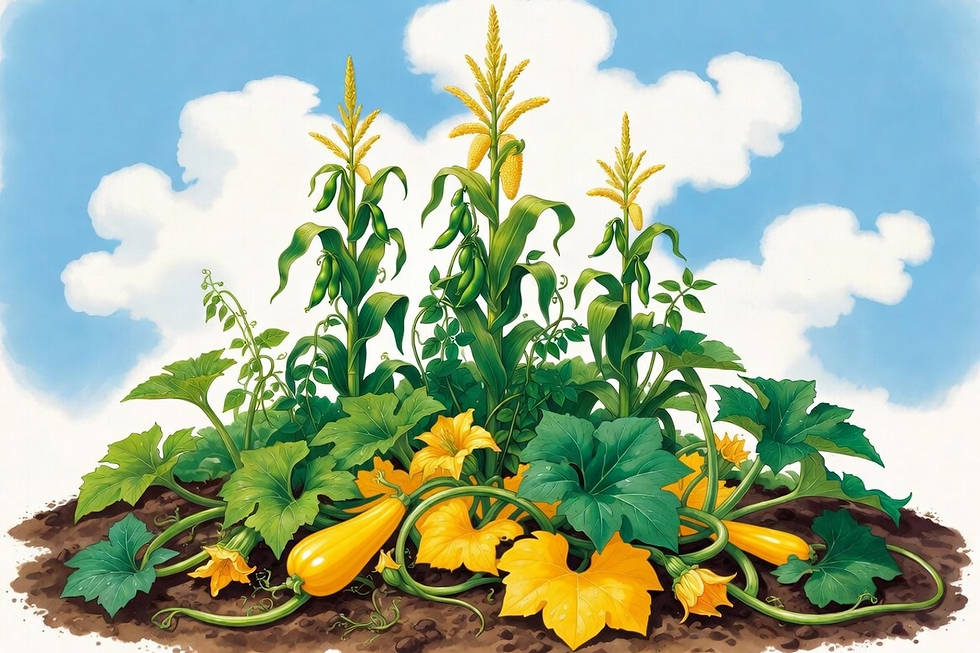
For centuries, Indigenous peoples of North America, including the Iroquois (Haudenosaunee) and other tribes, cultivated corn, beans, and squash in a symbiotic system known as the "Three Sisters." This companion planting method is more than a gardening technique—it’s a brilliant example of ecological harmony that maximizes space, boosts yields, improves soil health, and provides a nutritionally balanced harvest.
How the Three Sisters Work Together
In this method, the plants are grown in mounds or hills:
Corn (the "older sister") is planted first in the center. It grows tall and sturdy, acting as a natural trellis.
Pole beans or green beans (the "giving sister") are planted around the corn once it reaches about 6 inches tall. Their vines climb the corn stalks.
Squash (the "protective sister," often including pumpkins or other winter squash) is planted around the base. Its broad, sprawling vines cover the ground.
Each plant plays a unique role, creating a self-sustaining mini-ecosystem.
Key Benefits of the Three Sisters Method
1. Natural Structural Support Corn provides a strong vertical support for climbing beans, eliminating the need for artificial trellises or stakes. In return, the twining bean vines help stabilize the corn stalks against wind. This efficient use of vertical space allows gardeners to grow more food in less area.
2. Soil Enrichment and Nitrogen Fixation Beans are legumes that host nitrogen-fixing bacteria (rhizobia) in their root nodules. These bacteria convert atmospheric nitrogen into a form plants can use, naturally fertilizing the soil. This benefits the heavy-feeding corn and squash, reducing or eliminating the need for synthetic fertilizers. Studies show this polyculture improves nutrient efficiency and can even lower soil nitrate levels at harvest, potentially reducing leaching into water sources.
3. Weed Suppression and Moisture Retention Squash’s large leaves act as a living mulch, shading the soil to keep it cool and moist while blocking sunlight from reaching weed seeds. This reduces weeding chores and conserves water—especially valuable in drier conditions. The prickly vines can also deter some animal pests like raccoons or deer.
4. Pest and Disease Management Diversity in the planting disrupts pest cycles. Monocultures often attract concentrated pests, but the mixed system makes it harder for insects to find their targets. Recent research suggests the combination can enhance chemical defenses in maize (corn) against herbivores and attract beneficial insects or natural enemies of pests. The overall biodiversity promotes a healthier garden ecosystem.
5. Higher Yields and Land Efficiency The Three Sisters often outperform monocultures in total productivity. Historical and modern experiments show greater energy and protein yields per hectare. The Land Equivalent Ratio (LER) is typically higher, meaning the combined system produces more food from the same land than growing the crops separately.
6. Nutritional Completeness Together, these crops form a nearly complete diet:
Corn supplies carbohydrates and energy.
Beans provide protein and essential amino acids (complementing corn’s profile).
Squash offers vitamins (like A and C), fiber, and minerals.
This combination sustained communities for generations and remains a foundation for balanced meals today (think succotash or corn-bean-squash stew).
7. Sustainability and Soil Health The method builds long-term soil fertility. Leftover vines and roots add organic matter, supporting microbial life. It’s a model for regenerative agriculture—low-input, resilient, and environmentally friendly.
Additional Advantages
Space-saving — Ideal for small gardens or intensive plots.
Aesthetic appeal — Creates a beautiful, lush garden bed.
Cultural and educational value — Connects gardeners to Indigenous wisdom and traditional ecological knowledge.
Pollinator support — Flowers from all three attract bees and other beneficial insects.
Tips for Success (and Potential Considerations)
Plant in well-drained soil with full sun. Use heirloom varieties suited to your climate (e.g., dent or flint corn for strong stalks, pole beans like Blue Lake, and vigorous squash like Waltham Butternut). Timing is key: corn first, then beans, then squash. Some modern gardeners note challenges like ensuring strong corn stalks for heavy beans or choosing the right squash variety to avoid overcrowding, but with proper spacing, these are manageable.
Conclusion
Planting corn, green beans, and squash together is a proven, low-maintenance way to create a thriving garden that works with nature rather than against it. Whether you’re a backyard gardener seeking better harvests or interested in sustainable food systems, the Three Sisters offers profound lessons in cooperation, resilience, and abundance. This season, try this ancient method—you’ll not only grow food but also nurture healthier soil and a deeper connection to the land.
Happy planting! Your garden (and dinner table) will thank you.


Comments